Strategic Visual Communication: Leveraging the Learning Disability Icons Set Vector for Inclusive Design
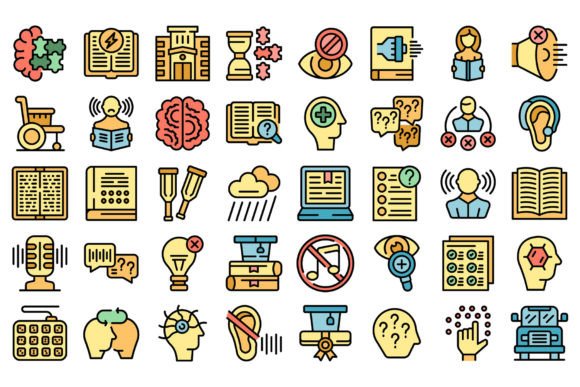
In the modern digital landscape, inclusivity is no longer a peripheral concern; it is a central pillar of effective communication and brand integrity. For educators, marketers, and business owners, the challenge often lies not in the intent to be inclusive, but in the execution. This is where high-quality visual assets become critical infrastructure rather than mere decoration. The Learning Disability Icons Set Vector represents a strategic resource for professionals who need to communicate complex concepts regarding neurodiversity, accessibility, and support systems with clarity and respect.
When you integrate a Learning disability icons set outline vector into your workflow, you are making a deliberate choice to enhance user experience (UX) and broaden your audience reach. These assets are not just clip art; they are functional tools that bridge the gap between abstract educational policies and tangible user understanding. Whether you are designing a school portal, creating marketing materials for a therapy practice, or developing internal training modules for corporate diversity initiatives, the right visual language can significantly impact how your message is received and acted upon.
The Strategic Value of Vector-Based Inclusivity Assets
Understanding why vector formats matter is essential for long-term project viability. Unlike raster images, which lose quality when scaled, vector graphics remain crisp at any size. This technical advantage translates directly into operational efficiency. A single file from a Learning Disability Icons Set Vector collection can serve multiple purposes: a tiny favicon for a website, a large banner for a conference presentation, or a detailed illustration in a printed brochure. This versatility reduces the need for multiple asset versions, streamlining your design pipeline and ensuring brand consistency across all touchpoints.
Furthermore, the availability of formats such as JPG, EPS, AI, PSD, and PNG provides flexibility for different skill levels and software ecosystems. A marketer using Canva might prefer the PNG files for their transparency and ease of use, while a professional graphic designer will leverage the AI or EPS files to customize colors, stroke weights, and compositions. This adaptability ensures that the School test color thin line aesthetics can be seamlessly integrated into existing brand guidelines without requiring a complete visual overhaul.
Enhancing Communication in Educational and Professional Contexts
The primary function of these icons is to reduce cognitive load. In educational settings, students with learning disabilities often benefit from visual cues that reinforce textual information. A well-designed icon can instantly convey the concept of "extra time," "quiet space," or "audio support" without requiring lengthy explanations. For educators and administrators, using a standardized Learning Disability Icons Set Vector helps create a predictable and supportive environment. It signals to students and parents that the institution is prepared and knowledgeable about diverse learning needs.
Beyond the classroom, these visuals play a crucial role in corporate training and human resources. As companies strive to build more inclusive workplaces, HR departments must communicate accommodation policies clearly. Using professional, non-stigmatizing imagery helps normalize conversations about neurodiversity. Instead of relying on sterile text documents, an internal portal equipped with intuitive icons can guide employees through the process of requesting accommodations, making the system feel more approachable and less bureaucratic.
Practical Applications for Marketers and Creators
For content creators and small business owners, authenticity is currency. Audiences are increasingly savvy and can detect performative inclusivity. To avoid this pitfall, it is essential to use assets that are thoughtful and accurate. The Learning disability icons set outline vector offers a clean, modern aesthetic that avoids clichés. By incorporating these icons into blog posts, social media graphics, or email newsletters, you signal a genuine commitment to accessibility.
- Website Navigation: Use icons to highlight accessibility features in your site footer or help center, making them easy to find for users who need them.
- Infographics: Break down statistics about neurodiversity in the workplace or education system using clear, engaging visuals that retain reader attention.
- Presentation Decks: Enhance pitch decks or educational seminars with consistent iconography that reinforces key points about inclusive practices.
- Print Materials: Utilize the high-resolution capabilities of EPS and AI formats for brochures, flyers, and posters where print quality is paramount.
Decision-Making: When and How to Implement These Assets
Before downloading and deploying a Learning Disability Icons Set Vector, consider your specific goals. Are you aiming to inform, persuade, or facilitate? If the goal is facilitation, such as helping a student navigate a testing center, clarity and simplicity are paramount. The School test color thin line style is particularly effective here because it is unobtrusive yet distinct. It does not overwhelm the user with heavy colors or complex details, allowing the core message to stand out.
However, if the goal is persuasion or awareness-raising, you might opt for more expressive variations within the set. The key is intentionality. Randomly placing icons on a page without context can lead to confusion or, worse, misinterpretation. Each icon should serve a purpose. Ask yourself: Does this visual add value? Does it clarify the accompanying text? Is it culturally and contextually appropriate?
It is also vital to consider the technical integration. Ensure that your web developers understand how to implement SVG or PNG files correctly to maintain accessibility standards, such as adding appropriate alt text. An icon is only as inclusive as its implementation. If a screen reader cannot interpret the image, the visual aid fails its primary purpose for visually impaired users.
Risks of Unintentional Usage
While the Learning Disability Icons Set Vector is a powerful tool, misuse can undermine your efforts. One common risk is stereotyping. Even with well-designed assets, pairing an icon with insensitive language or outdated terminology can negate the positive impact of the visual. Always review the surrounding content to ensure it aligns with current best practices in inclusive language.
Another risk is over-reliance. Icons should complement text, not replace it entirely, especially when dealing with complex legal or medical information. Ambiguity can arise if an icon is open to multiple interpretations. For instance, an icon representing "dyslexia" might be confused with general reading difficulty if not clearly labeled. Providing clear labels and context mitigates this risk and ensures that your communication remains precise.
Long-Term Branding and Operational Efficiency
Investing in a comprehensive icon set pays dividends over time. By establishing a library of inclusive visuals, you create a reusable asset base that speeds up future projects. This operational efficiency allows teams to focus on strategy and content rather than searching for suitable images. Moreover, consistent use of these icons builds brand recognition. Over time, your audience will associate your specific visual style with trust, professionalism, and inclusivity.
For entrepreneurs and decision-makers, this consistency strengthens brand equity. It demonstrates a long-term commitment to values rather than a fleeting trend. In a competitive market, this differentiation can be a significant advantage. Clients and partners increasingly prefer to work with organizations that demonstrate social responsibility and attention to detail in all aspects of their operations, including visual communication.
Final Considerations for Strategic Implementation
To maximize the utility of the Learning Disability Icons Set Vector, adopt a phased approach. Start by auditing your current materials to identify gaps in inclusive communication. Prioritize high-traffic areas such as homepage accessibility statements, onboarding documents, and customer support pages. Integrate the icons gradually, gathering feedback from users to refine their placement and usage.
Remember that inclusivity is an ongoing process, not a one-time fix. Regularly update your knowledge of accessibility standards and adjust your visual strategy accordingly. The Learning disability icons set outline vector is a starting point, a tool to facilitate better communication. Its true value is realized when it is used thoughtfully, strategically, and with a genuine desire to connect with a diverse audience.
By choosing high-quality, versatile formats like AI, EPS, and PNG, you ensure that your inclusive design efforts are sustainable and scalable. Whether you are an educator shaping young minds, a marketer building brand loyalty, or a business owner fostering an inclusive workplace, these visual assets provide the clarity and professionalism needed to achieve meaningful results. Make the decision to communicate with intention, and let your visuals reflect the depth of your commitment to inclusivity.