Enhancing Educational Materials with Professional Notebook Illustrations: A Guide for Educators and Designers
In the rapidly evolving landscape of modern education, visual aids have transitioned from being mere decorative elements to essential tools for cognitive engagement. Whether you are a teacher creating custom worksheets, a graphic designer building educational assets, or a parent homeschooling your children, the quality of your visual resources matters immensely. This article explores the significance of high-quality digital illustrations, specifically focusing on Education School Notebook themes, and how utilizing versatile file formats can streamline your creative workflow.
The Role of Visuals in Modern Education
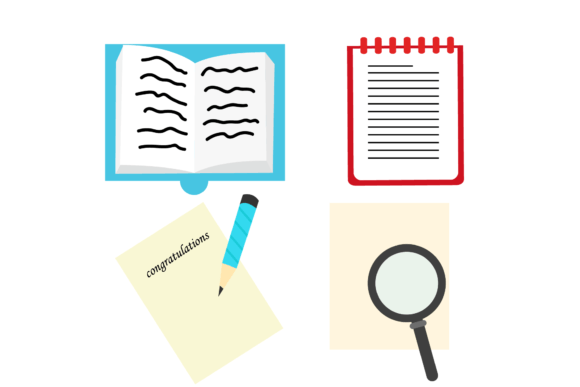
Human beings are inherently visual learners. Research consistently shows that information presented with relevant imagery is retained better than text alone. When we talk about an Education School Notebook illustration, we are not just referring to a simple drawing of a book. We are discussing a symbol that represents learning, organization, and academic growth. These visuals serve as anchors in educational materials, helping students associate abstract concepts with tangible objects.
For educators, integrating such illustrations into lesson plans can break the monotony of text-heavy handouts. For designers, these assets are the building blocks of compelling educational branding. The key lies in finding resources that are not only aesthetically pleasing but also technically flexible enough to fit various design needs.
Why Format Versatility Matters in Digital Design
One of the most common frustrations for creators is downloading a design only to find it incompatible with their software or unsuitable for their intended output medium. This is where understanding file types becomes crucial. A professional-grade illustration should not be limited to a single format. To ensure maximum utility, premium designs are often available in multiple formats, catering to both novice users and advanced professionals.
Consider the following breakdown of why having access to diverse file types is a game-changer for your projects:
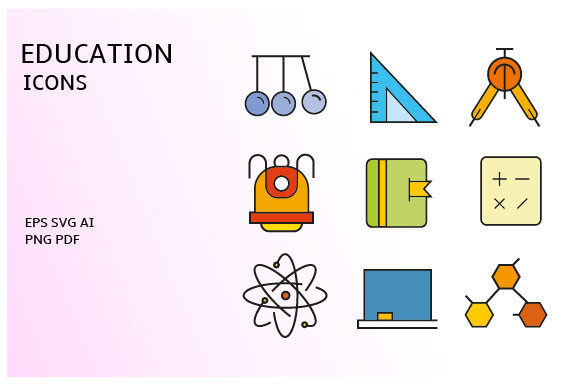
- AI File (Adobe Illustrator): This is the gold standard for vector graphics. It allows for infinite scalability without loss of quality, making it perfect for large-format prints like banners or posters.
- EPS File (Encapsulated PostScript): A universal vector format that is compatible with a wide range of design software beyond Adobe products. It is ideal for professional printing services.
- SVG File (Scalable Vector Graphics): Perfect for web use. SVGs are lightweight, code-based, and render sharply on any screen size, ensuring your educational website looks crisp on mobile devices and desktops alike.
- JPG File (Joint Photographic Experts Group): A raster format suitable for quick previews, social media posts, or documents where editing is not required. It is widely supported but does not support transparency.
- PNG File (Portable Network Graphics): Another raster format, but with the added benefit of supporting transparent backgrounds. This is invaluable for layering illustrations over colored backgrounds or other images in presentations.
By offering a design in all five of these formats—AI, EPS, SVG, JPG, and PNG—creators ensure that the asset is future-proof and adaptable to any scenario.
Technical Specifications: Understanding Canvas Size and Resolution
When selecting digital assets, technical specifications are just as important as aesthetic appeal. A common specification you might encounter is a canvas size of 1920 px X 1280 px. But what does this mean for your work?
This resolution corresponds to a high-definition aspect ratio that is widely used in digital displays. For context, 1920x1280 pixels provide sufficient detail for full-screen slides in PowerPoint or Keynote presentations, which are staples in modern classrooms. It ensures that when you project your lesson material, the image remains sharp and free from pixelation.
However, the true power of vector files (AI, EPS, SVG) is that they are not bound by this pixel dimension. You can scale them up to billboard size or down to a business card icon without any degradation. The raster files (JPG, PNG) provided at 1920x1280 px serve as high-quality ready-to-use instances, while the vector files offer unlimited potential. This duality ensures that whether you are designing a small flashcard or a large classroom poster, the same asset can serve both purposes effectively.
Practical Applications in Daily Teaching and Business
How can you practically apply these Education School Notebook illustrations in your daily activities? The possibilities are extensive:
- Custom Worksheet Headers: Use the PNG file with a transparent background to place a notebook icon at the top of math or language arts worksheets. This adds a professional touch and helps categorize subjects visually.
- E-Learning Course Branding: If you are creating an online course, use the SVG file for your module icons. They will load quickly and look sharp on any device, enhancing the user experience for your students.
- Social Media Content: Teachers and educational influencers can use the JPG files to create engaging Instagram or Pinterest posts. Pair the illustration with motivational quotes or study tips to increase engagement.
- Printable Planners: Utilize the AI or EPS files to customize colors and elements, creating unique planner covers or journal inserts for students to help them organize their school year.
These examples highlight how a single design asset can permeate various aspects of educational content creation, saving time and maintaining visual consistency.
Addressing Common Misconceptions About Digital Assets
There are several misunderstandings regarding the use of pre-made digital illustrations. Let’s clarify a few:
Misconception 1: "Pre-made designs are not unique."
While the base asset is shared, the way you edit and combine it with other elements makes your final product unique. With editable AI and EPS files, you can change colors, add textures, or integrate text to create a bespoke look that aligns with your brand or classroom theme.
Misconception 2: "Vector files are too complicated to use."
Many beginners shy away from AI or EPS files, thinking they require expert skills. However, many modern design tools now support these formats, and basic edits like color changes are straightforward. Moreover, having the vector file means you never have to worry about resolution issues again, which is a significant long-term benefit.
Misconception 3: "High resolution means large file sizes that slow down my computer."
While raster files like JPGs and PNGs at 1920x1280 px are detailed, they are optimized for digital use. Vector files are actually quite small in file size because they store mathematical paths rather than pixel data. This makes them efficient to store and share.
The Value of Ease of Use and Editability
A critical factor in choosing digital resources is the guarantee of ease of use. A design that is difficult to manipulate becomes a burden rather than a tool. High-quality educational illustrations are crafted with layers and organized groups, allowing users to isolate specific elements easily. Whether you need to change the color of the notebook cover to match your school’s colors or resize the illustration for a thumbnail, the design should facilitate these actions without friction.
This flexibility empowers educators and designers to maintain creative control. It bridges the gap between professional-grade design and accessible DIY customization. You do not need to be a seasoned graphic artist to produce polished, professional-looking materials when starting with a well-structured, editable template.
Conclusion: Investing in Quality Educational Resources
In conclusion, the integration of high-quality visuals like the Education School Notebook illustration is a strategic move for anyone involved in education or content creation. By understanding the importance of multiple file formats—AI, EPS, SVG, JPG, and PNG—and leveraging the benefits of scalable vector graphics, you can enhance the effectiveness and aesthetic appeal of your materials.
We guarantee that this design is easy to use and can be edited as needed, providing you with the freedom to adapt it to your specific requirements. Thank you for visiting our shop and considering our resources for your next project. Your support enables us to continue creating valuable tools for the educational community. Thank you for purchasing our design, and we look forward to seeing how you bring these illustrations to life in your classrooms and creative endeavors.
For more insights on educational design trends and tips on using digital assets effectively, stay tuned to our blog. Remember, great teaching is not just about the content; it is also about how that content is presented.